The Evolution of "Cursed" in Minecraft: How Gaming Communities Celebrate the Weird
An exploration of how Minecraft players transformed "cursed" from a simple descriptor into a complex aesthetic category that celebrates glitches, bizarre builds, and the beautifully broken aspects of creative gaming spaces.
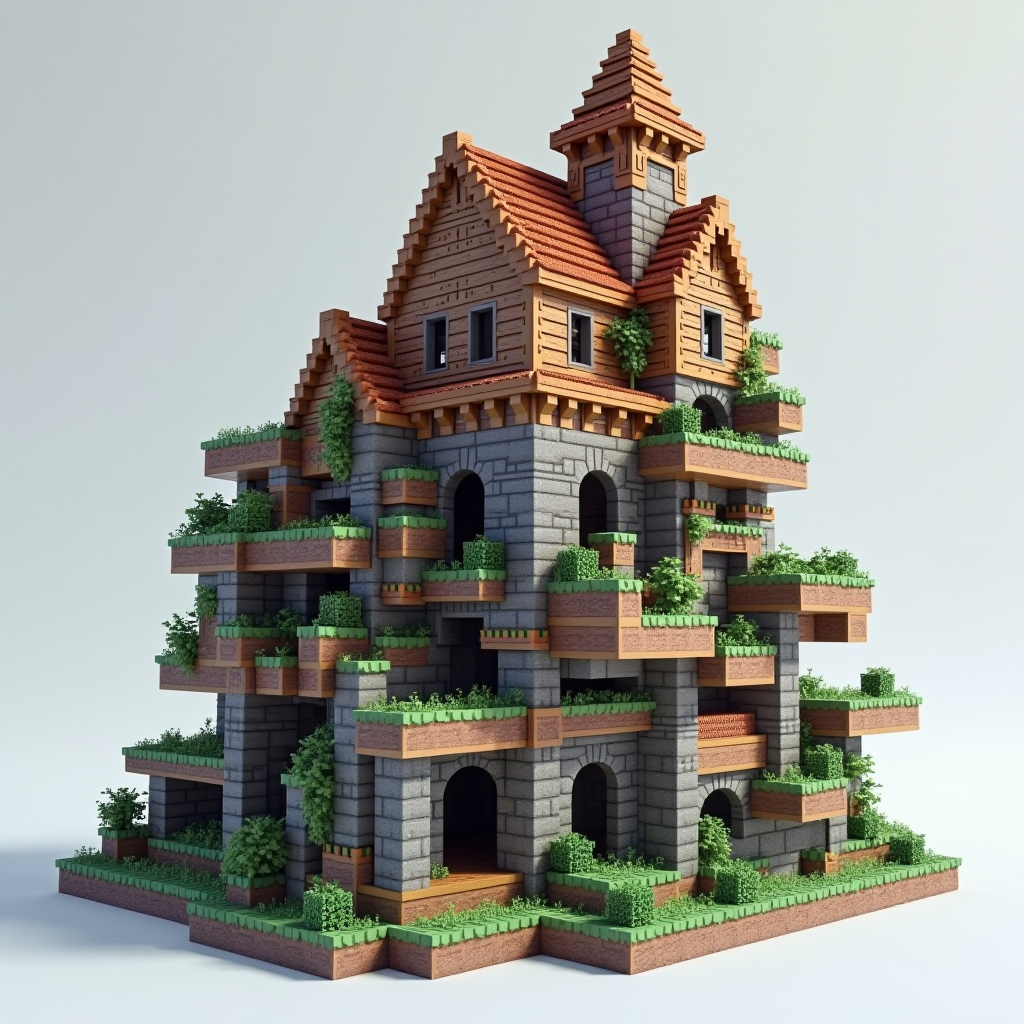
In the vast, blocky universe of Minecraft, where players have built everything from pixel-perfect recreations of famous landmarks to functioning computers, a peculiar aesthetic has emerged that celebrates the opposite of perfection. The term "cursed" has evolved from a simple descriptor of something wrong or broken into a sophisticated humor category that reveals how gaming communities develop their own visual languages and shared appreciation for the unexpected.
What began as players sharing screenshots of texture glitches and rendering errors has transformed into an entire subculture within Minecraft communities. Today, "cursed Minecraft" represents a deliberate aesthetic choice, a form of digital folk art that embraces the weird, the broken, and the hilariously wrong. This evolution tells us something profound about how gaming communities create identity through humor and how shared language strengthens bonds between players across the globe.
The journey of "cursed" from bug report to beloved meme category demonstrates the creative power of gaming communities to recontextualize technical failures as artistic expressions. In doing so, Minecraft players have created a unique space where the line between mistake and masterpiece becomes beautifully blurred, and where gaming slang evolves to capture experiences that traditional language struggles to describe.
From Bug to Feature: The Origins of Cursed Content
The story of "cursed" in Minecraft begins with the game's technical quirks and rendering peculiarities. In the early days of Minecraft, players frequently encountered texture glitches, lighting errors, and physics anomalies that created unsettling or bizarre visual effects. A pig might render with a creeper's texture, water might flow upward defying gravity, or terrain generation could create impossible geological formations that seemed to violate the game's own rules.
Initially, these glitches were simply reported as bugs or shared as amusing technical failures. Players would post screenshots to forums with titles like "Something's wrong with my game" or "Is this supposed to happen?" However, as the community grew and meme culture in gaming became more sophisticated, these images began to be collected and shared not as problems to be fixed, but as entertainment in their own right.
The term "cursed" emerged as the perfect descriptor for these images because it captured both the unsettling nature of the glitches and the humorous recognition that something was fundamentally wrong. Unlike terms like "broken" or "glitched," which focused on the technical aspect, "cursed" added a layer of supernatural humor, suggesting that these images were somehow haunted or possessed. This linguistic choice was crucial in transforming technical failures into a humor category, as it reframed bugs as features worthy of appreciation rather than frustration.
As Minecraft's popularity exploded and platforms like Reddit, Discord, and Twitter became central to gaming communication, cursed Minecraft content found its perfect distribution channels. Subreddits like r/cursedminecraft and dedicated Discord servers emerged, creating spaces where players could share and celebrate these bizarre images. The community's response was overwhelmingly positive, with cursed content often receiving more engagement than perfectly executed builds, revealing a collective appetite for the weird and unexpected.
The Anatomy of Cursed: Understanding the Aesthetic
What exactly makes something "cursed" in Minecraft? The answer reveals a sophisticated understanding of visual humor and aesthetic transgression that has developed within the community. Cursed content typically violates one or more fundamental expectations about how Minecraft should look or behave, creating a sense of wrongness that is simultaneously unsettling and hilarious.
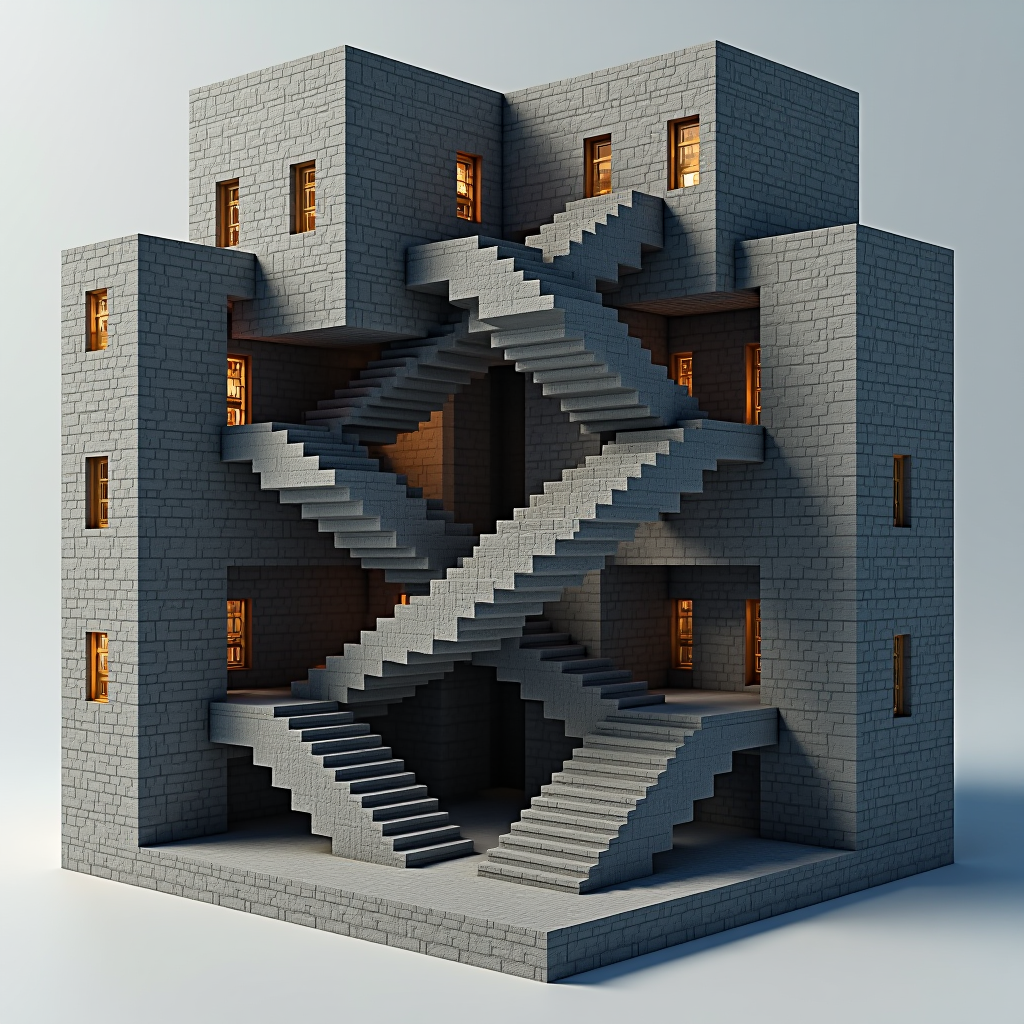
One common category of cursed content involves impossible or illogical builds. These might include structures that appear to defy physics, such as floating islands with no visible support that seem to violate even Minecraft's generous rules about gravity. Other examples include buildings with doors that lead nowhere, staircases that loop back on themselves impossibly, or rooms with perspectives that don't make geometric sense. These builds play with player expectations about spatial logic, creating a cognitive dissonance that triggers the "cursed" response.
Another major category involves texture and material mismatches that create visual discomfort. Imagine a house built entirely from raw meat blocks, a tree with stone leaves and wooden trunk textures reversed, or a character skin that combines incompatible elements in disturbing ways. These images work because they violate our learned associations about what materials should be used for what purposes, even within Minecraft's already abstract visual language.
Scale violations represent another powerful source of cursed content. Minecraft's blocky aesthetic creates clear expectations about relative sizes, so when these are violated—a chicken the size of a house, a player character with impossibly long limbs, or a door that's only half a block tall—the result feels fundamentally wrong. These scale manipulations tap into a primal sense of proportion that exists even in abstract gaming spaces, making them particularly effective at generating the cursed response.
Perhaps most interestingly, the community has developed a nuanced understanding of degrees of cursedness. Some images are "mildly cursed"—slightly off but not too disturbing—while others are "extremely cursed" or even "blessed-cursed," a paradoxical category for images that are simultaneously beautiful and wrong. This sophisticated taxonomy demonstrates how gaming communities develop complex aesthetic frameworks that rival traditional art criticism in their specificity and shared understanding.
Intentional Cursedness: When Players Become Artists
As the cursed aesthetic gained popularity, something remarkable happened: players began deliberately creating cursed content. What started as appreciation for accidental glitches evolved into an intentional art form, with creators using mods, texture packs, and creative building techniques to produce increasingly elaborate cursed images. This transition from found art to created art marks a crucial moment in the evolution of gaming memes and community identity.
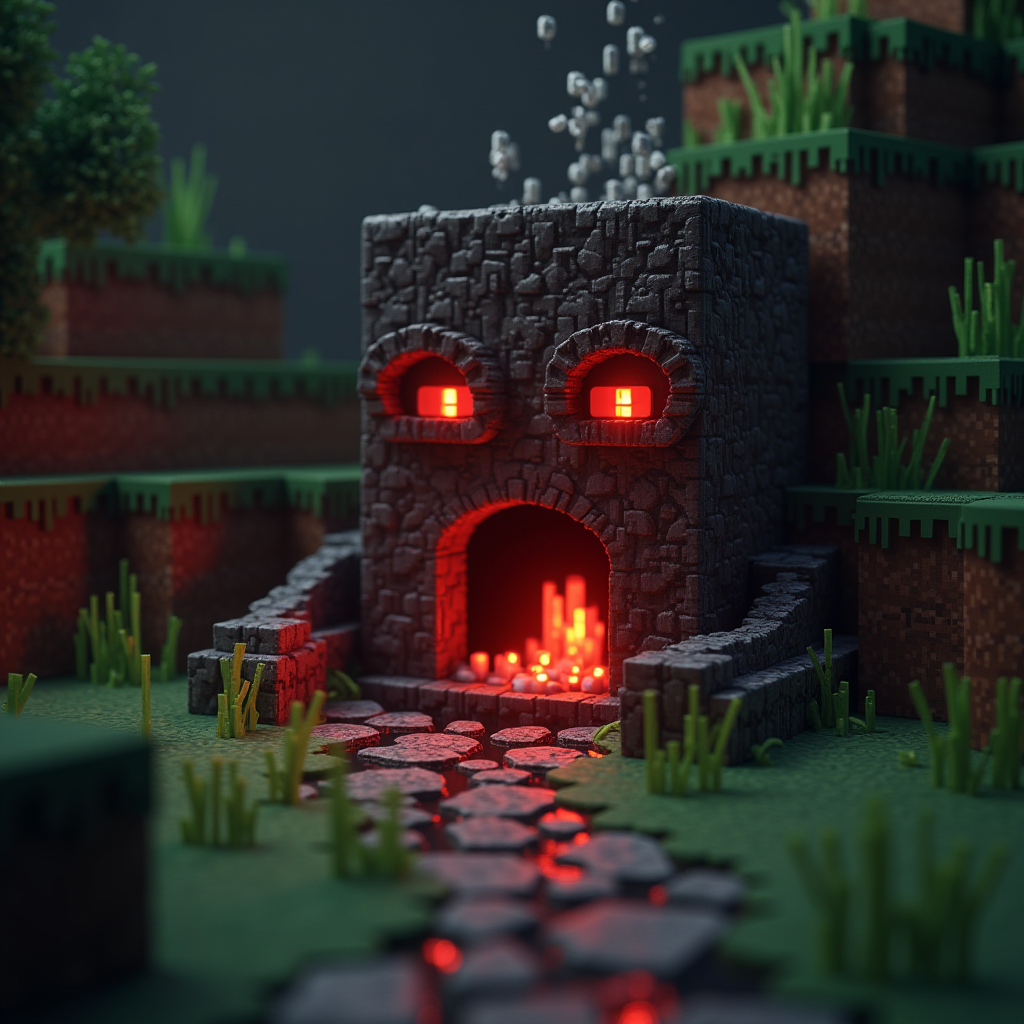
The tools for creating cursed content have become increasingly sophisticated. Custom texture packs allow creators to swap textures in unexpected ways, making grass look like lava or turning peaceful mobs into nightmare fuel. Resource pack manipulation enables the creation of impossible block combinations and visual effects that the base game would never produce. Meanwhile, mods like "Cursed Minecraft" have been developed specifically to generate random cursed scenarios, automating the creation of bizarre gameplay experiences.
This intentional creation of cursed content has spawned its own subgenre of Minecraft content creation. YouTubers and streamers have built entire channels around playing "cursed" versions of Minecraft, where every texture is wrong, physics behave unpredictably, and familiar game mechanics are twisted into bizarre new forms. These videos often attract millions of views, demonstrating the broad appeal of cursed aesthetics beyond just static images.
The rise of intentional cursed content also reveals something important about gamer identity and humor in gaming communities. By deliberately creating and sharing cursed content, players signal their membership in a community that values creativity, absurdist humor, and the subversion of expectations. It's a form of in-game jokes that requires cultural literacy—you need to understand what Minecraft "should" look like to appreciate what makes something effectively cursed. This shared understanding creates bonds between community members and establishes cursed content as a form of fan language that strengthens group identity.
Cursed as Cultural Commentary: What the Weird Reveals
The popularity of cursed Minecraft content isn't just about random humor—it reflects deeper currents in gaming culture and how communities process their relationship with the games they love. Cursed content serves as a form of cultural commentary, allowing players to engage critically and playfully with Minecraft's design choices, limitations, and conventions.
At one level, cursed content represents a celebration of imperfection in an era where gaming increasingly emphasizes polish and photorealism. While AAA games pursue ever-more-realistic graphics and seamless experiences, cursed Minecraft revels in the broken, the glitchy, and the obviously artificial. This embrace of imperfection can be read as a form of resistance to the pressure for perfection that pervades both gaming and broader digital culture. By finding beauty and humor in the broken, the community asserts that entertainment value doesn't require technical perfection.

Cursed content also functions as a form of meta-commentary on Minecraft itself. By highlighting what's wrong or weird, cursed images implicitly reference what's normal and expected, creating a dialogue about the game's design. When players create a cursed image of a square sun or circular blocks, they're not just making a joke—they're engaging with Minecraft's fundamental aesthetic choices and exploring what happens when those rules are broken. This kind of playful criticism demonstrates a deep engagement with the game that goes beyond simple consumption.
Furthermore, the cursed aesthetic represents a democratization of creativity within gaming communities. You don't need to be a master builder or redstone engineer to create or appreciate cursed content. A simple texture swap or fortunate glitch can generate content that resonates with thousands of players. This accessibility makes cursed content a particularly inclusive form of gaming communication, allowing players of all skill levels to participate in community culture and contribute to the shared language of gaming memes.
The evolution of "cursed" also demonstrates how gaming communities serve as laboratories for linguistic innovation. The term has expanded beyond Minecraft to describe similar aesthetics in other games, and even beyond gaming entirely. "Cursed images" has become a recognized internet genre, but its gaming origins remain influential in shaping how the term is understood and applied. This linguistic migration shows how gamer culture and language influence broader internet culture, with gaming communities often serving as early adopters and innovators of digital communication styles.
The Social Life of Cursed Content: Community and Connection
Perhaps the most significant aspect of cursed Minecraft content is its role in building and maintaining gaming communities. The sharing, discussion, and creation of cursed content creates multiple opportunities for social connection and collective identity formation. Understanding this social dimension reveals why cursed content has become such a persistent and beloved part of Minecraft culture.
Cursed content serves as a powerful conversation starter and bonding mechanism. When players share cursed images, they're not just posting funny pictures—they're inviting others to participate in a shared experience of recognition and reaction. The comments on cursed posts often become spaces for collaborative humor, with players building on each other's jokes, sharing their own cursed experiences, or debating the precise degree of cursedness. This collaborative humor strengthens social bonds and creates a sense of community belonging.
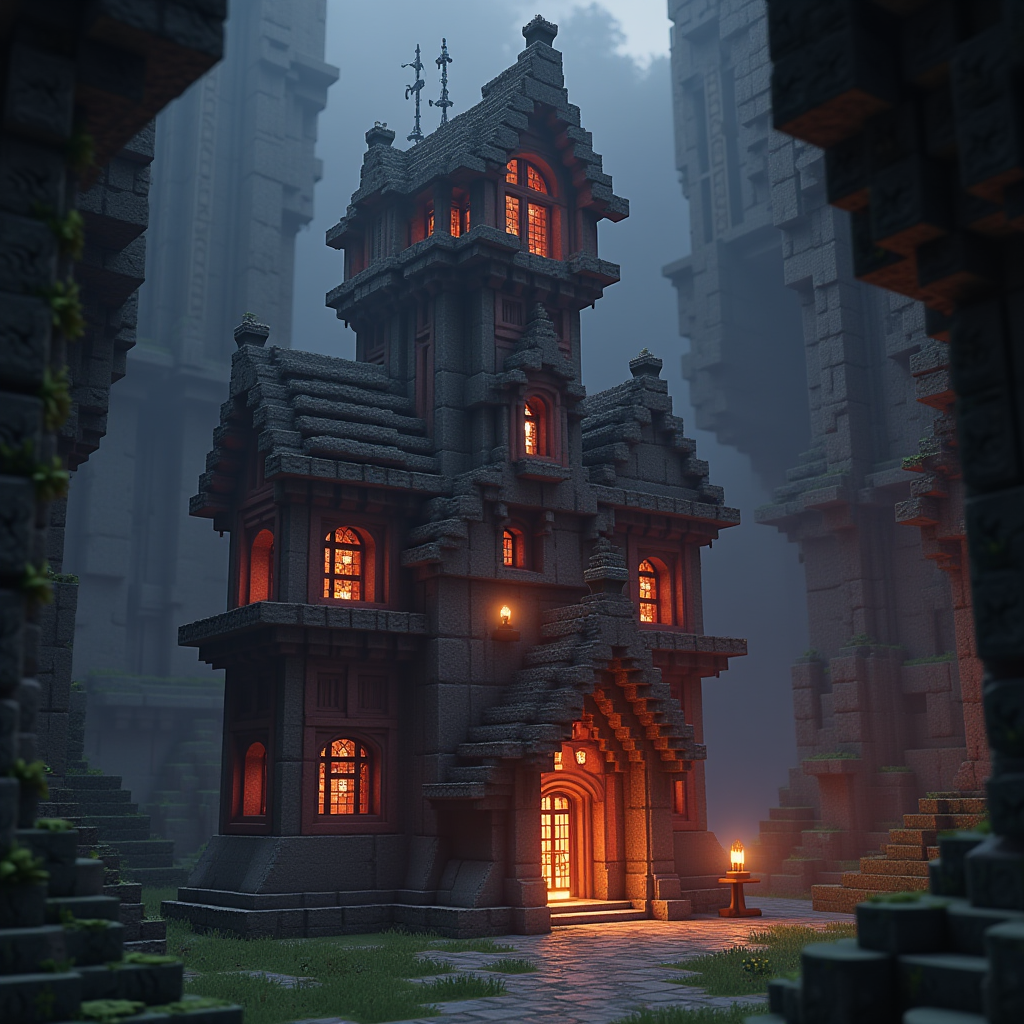
The cursed aesthetic has also spawned community events and challenges that bring players together. "Cursed building competitions" challenge players to create the most effectively unsettling structures, while "cursed texture pack challenges" force players to complete normal gameplay objectives with deliberately wrong textures. These events transform cursed content from passive consumption into active participation, creating shared experiences that strengthen community ties and generate new inside jokes that further enrich the community's shared language.
Moreover, cursed content creates opportunities for cross-generational and cross-cultural connection within gaming communities. The humor of cursed images often transcends language barriers—a picture of a pig with a creeper's face is funny whether you speak English, Spanish, or Mandarin. This universal accessibility makes cursed content a particularly effective tool for building inclusive gaming communities that welcome players from diverse backgrounds. The shared appreciation for the weird and unexpected becomes a common ground that unites players across differences.
The persistence of cursed content also demonstrates the importance of humor in gaming communities as a coping mechanism and stress relief. Gaming can be competitive and sometimes frustrating, but cursed content provides a space for pure, absurdist enjoyment that requires no skill or achievement. It's a reminder that games are ultimately about fun and creativity, not just winning or building perfectly. This emotional function makes cursed content an essential part of healthy gaming communities, providing balance and perspective.
Embracing the Weird: The Future of Cursed Gaming Culture
The evolution of "cursed" in Minecraft represents more than just the lifecycle of a meme—it demonstrates how gaming communities develop sophisticated aesthetic frameworks, linguistic innovations, and social practices that enrich the gaming experience. From accidental glitches to intentional art form, from simple descriptor to complex cultural category, cursed content has become an integral part of Minecraft's identity and a model for how gaming communities celebrate the unexpected.
As Minecraft continues to evolve and new games emerge, the cursed aesthetic will likely continue to adapt and spread. We're already seeing similar humor categories develop in other gaming communities, each with their own variations and cultural specifics. The fundamental appeal of cursed content—the celebration of imperfection, the joy of the unexpected, the pleasure of shared absurdist humor—suggests that this aesthetic will remain relevant as long as gaming communities exist.
For game developers and community managers, the success of cursed content offers valuable lessons about the importance of leaving space for player creativity and emergent culture. The most vibrant gaming communities aren't those that are perfectly controlled and polished, but those that allow room for weirdness, experimentation, and player-driven cultural innovation. By embracing rather than suppressing the cursed, the broken, and the bizarre, games can foster the kind of creative, engaged communities that sustain long-term success.
Ultimately, the story of cursed Minecraft is a story about how gaming communities create meaning, identity, and connection through shared language and humor. It's about how players transform technical limitations into creative opportunities, how inside jokes become cultural touchstones, and how the weird and unexpected can become sources of joy and community. In celebrating the cursed, Minecraft players have created something genuinely special—a space where imperfection is not just accepted but celebrated, where the broken becomes beautiful, and where shared laughter strengthens the bonds that make gaming communities feel like home.
The next time you encounter something cursed in Minecraft—or any game—take a moment to appreciate it. That glitch, that bizarre build, that impossible texture combination isn't just a mistake or a joke. It's a testament to the creativity and humor of gaming communities, a reminder that the best gaming experiences often come from the unexpected, and a celebration of the weird, wonderful culture that makes gaming communities so special.